
Best Root Canal Woodbridge VA | Painless Nerve Treatment | 703 Dental
Root Canal Woodbridge VA: Saving Your Natural Smile
There is perhaps no dental procedure more misunderstood than the root canal. For many, the phrase “root canal” is synonymous with pain. However, at 703 Dental, we want to change that narrative. A root canal in Woodbridge, VA, is not the cause of pain; it is the solution to it. Our practice utilizes modern endodontic techniques and advanced anesthetics to ensure that your treatment is as comfortable and stress-free as a standard filling.
The goal of root canal therapy is simple: to save a natural tooth that has become severely infected or damaged, preventing the need for an extraction. When the internal “pulp” of your tooth becomes compromised, it can lead to intense throbbing and systemic health risks. At 703 Dental, we specialize in removing that infection and restoring the integrity of your tooth so you can get back to your life without pain.
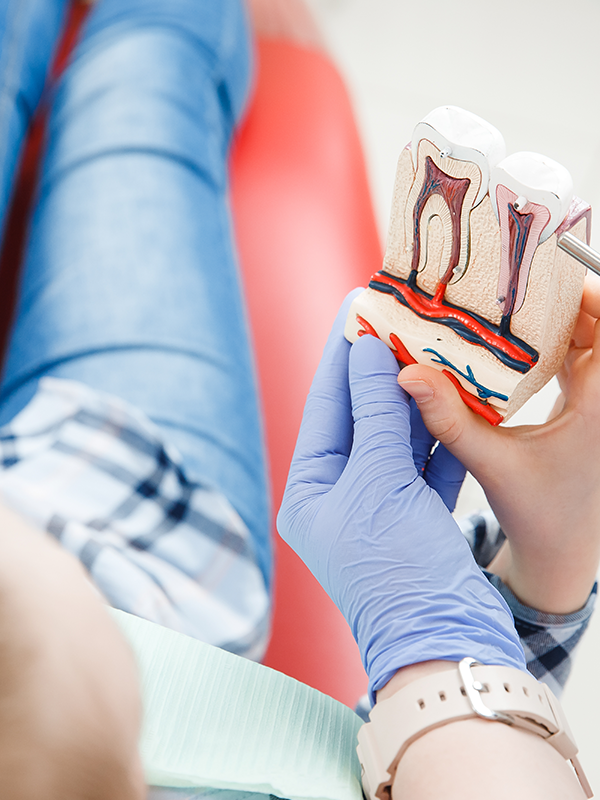
Understanding the Anatomy of Your Tooth
To understand why a root canal is necessary, it helps to know what is happening inside your tooth. A tooth is not a solid, lifeless object; it is a complex structure with several layers:
Enamel: The hard, white outer shell that protects the tooth.
Dentin: A sensitive layer of hard tissue beneath the enamel.
The Pulp: The soft center of the tooth containing blood vessels, connective tissue, and nerves.
The Root Canals: Small tunnels that lead from the pulp down into the jawbone.
The nerves in the pulp are responsible for sensing heat and cold, but once a tooth has fully emerged, the nerve is no longer vital for the tooth’s day-to-day function. When bacteria find their way into the pulp chamber—through a deep cavity, a crack, or a traumatic injury—the pulp becomes inflamed and eventually dies. This is where the pain begins, and this is where 703 Dental intervenes with expert endodontic care.
Signs You May Need a Root Canal in Woodbridge
If you are experiencing dental discomfort in the 22193 area, it is important to know the “red flags” that indicate an infected nerve. While only a professional exam at 703 Dental can confirm the need for a root canal, keep an eye out for these symptoms:
-
Persistent, Throbbing Pain: Pain that keeps you awake at night or is triggered by biting down.
-
Sensitivity to Temperature: Sharp pain when eating hot or cold foods that lingers long after the stimulus is gone.
-
Swollen or Tender Gums: A “pimple” on the gums (called an abscess) near the painful tooth.
-
Discoloration of the Tooth: A tooth that begins to look grey or dark compared to its neighbors.
-
Swelling of the Face or Neck: This indicates the infection may be spreading and requires immediate attention.
-
A Foul Taste or Breath: Caused by the drainage of an infection.
If you are experiencing any of these issues, do not wait. A “silent” infection can quickly turn into a major dental emergency.
The Root Canal Process at 703 Dental
At 703 Dental, we pride ourselves on a clinical process that prioritizes patient comfort and procedural precision. A typical root canal procedure involves the following steps:
Comprehensive Diagnosis
We start with a digital X-ray of the affected tooth. This allows the team at our office to see the shape of the root canals and determine the extent of the infection. We also perform sensitivity tests to confirm that the pulp is indeed compromised.
Profound Local Anesthesia
The most important step for our patients is ensuring they don’t feel a thing. We use advanced numbing techniques to ensure the tooth and the surrounding area are completely “asleep.” Most of our patients report that they feel nothing more than a bit of pressure during the procedure.
Removing the Infection
We create a small access opening in the crown of the tooth. Using specialized, microscopic instruments, we carefully remove the infected or dead pulp tissue from the chamber and the root canals.
Cleaning and Shaping
Once the pulp is removed, we thoroughly disinfect the interior of the tooth with antibacterial solutions. We then shape the canals to ensure they can be effectively sealed.
Sealing the Tooth
We fill the empty canals with a biocompatible material called gutta-percha. This rubber-like material seals the tooth from the inside out, preventing bacteria from re-entering the area.
Restoration
Because a tooth that has had a root canal is no longer “alive,” it can become brittle over time. To ensure it doesn’t fracture, 703 Dental almost always recommends placing a dental crown over the tooth. This restores the tooth’s strength and natural appearance.
The Benefits of Saving Your Natural Tooth
Many patients ask: “Why not just pull the tooth?” While extraction might seem like a simpler solution, 703 Dental always advocates for saving the natural tooth whenever possible.
-
Preventing Tooth Shifting: When a tooth is removed, the neighboring teeth begin to tilt and drift into the gap. This can lead to bite misalignment and TMJ issues.
-
Avoiding Bone Loss: Your jawbone requires the stimulation of a tooth root to maintain its density. Extracting a tooth leads to bone resorption over time.
-
Maintaining Function: No artificial replacement—not even a dental implant—functions exactly like a natural tooth. A root canal allows you to keep your natural biting force and sensory feedback.
-
Lower Long-Term Cost: While a root canal and crown have an upfront cost, they are often more affordable than the combined cost of an extraction followed by a bridge or dental implant.
Debunking Root Canal Myths
As a trusted dentist in Woodbridge, VA, we believe in educating our patients to alleviate their fears. Let’s clear up some common misconceptions:
Myth #1: Root canals are painful. In reality, root canals relieve pain. The procedure itself is no more uncomfortable than getting a cavity filled. The “pain” people associate with root canals is actually the pain of the infection that existed before the dentist intervened.
Myth #2: A root canal causes illness. This is an outdated myth based on flawed research from the early 1900s. There is no scientific evidence linking root canals to systemic illness. In fact, removing an infection from your mouth actually improves your overall health.
Myth #3: It’s better to just pull the tooth. Keeping your natural teeth is always the goal. An extraction is a permanent solution to a temporary problem, and replacing a missing tooth is more complex than saving one with a root canal.
Why Choose 703 Dental for Endodontic Care?
When you are in pain and need a root canal in 22193, you want a team that is experienced and empathetic.
-
Advanced Technology: We use digital imaging and electronic apex locators to ensure every millimeter of the root canal is cleaned and sealed perfectly.
-
Emergency Availability: We know that tooth pain doesn’t happen on a schedule. 703 Dental offers emergency appointments to get you out of pain as quickly as possible.
-
A Calming Atmosphere: Our office is designed to be a relaxing environment. We offer comfort amenities and a gentle chairside manner to help you through your procedure.
-
Comprehensive Care: From the initial diagnosis to the final placement of your permanent crown, we handle the entire process in-house, saving you trips to multiple specialists.
Caring for Your Tooth After a Root Canal
After your procedure at 703 Dental, your tooth may feel slightly sensitive for a few days—this is a normal part of the healing process. We recommend:
Avoid Chewing on the Tooth: Until your permanent crown is placed, the tooth is vulnerable. Try to chew on the opposite side of your mouth.
Maintain Oral Hygiene: Continue to brush and floss as normal, being gentle around the treated area.
Over-the-Counter Relief: Standard pain relievers like ibuprofen are usually all that is needed to manage post-operative sensitivity.
Financing and Insurance for Root Canals
Most dental insurance plans cover root canal therapy as a “basic” or “major” restorative service, often covering 50% to 80% of the cost. At 703 Dental, we are insurance-friendly and work with most major PPO providers in the Woodbridge area.
For those without insurance, we offer transparent pricing and flexible financing options like Cherry. We believe that financial concerns should never be a reason to live with dental pain or lose a tooth.
Frequently Asked Questions About Root Canals
How long does a root canal take?
Most root canals can be completed in one or two appointments, typically lasting 60 to 90 minutes each.
Will I be able to drive home after the procedure?
Yes. Since we use local anesthesia (numbing), you will be fully alert and able to drive yourself home or back to work.
Can a root canal fail?
While rare, a root canal can fail if a canal was unusually shaped and missed during cleaning, or if the crown fails. At 703 Dental, we use high-magnification and digital tools to minimize this risk.
What happens if I don't get a root canal?
The infection will not go away on its own. It will eventually destroy the tooth and can spread to the jawbone, face, and even into the bloodstream, which can be a life-threatening condition.
Schedule Your Visit to 703 Dental Today
Ready to prioritize your oral health? Join the hundreds of Woodbridge residents who trust 703 Dental for their smiles. We are currently accepting new patients and offer flexible scheduling to fit your busy life. 703 Dental in Woodbridge accommodates a wide range of patients by accepting multiple forms of insurance, including major PPO plans and Medicare Advantage providers like Delta Dental. Their dedicated team works to help families maximize their dental benefits while offering flexible financing options, such as Cherry, to manage any additional out-of-pocket costs.








What Our Woodbridge
Neighbors Say About 703 Dental